Moving Beyond the Chatbox with OpenClaw: Why the Next Era of AI is Agentic
For the past several years, our interaction with artificial intelligence has been defined by a strict, reactive boundary: the chat box. You open a browser tab, navigate to a cloud SaaS platform, paste a prompt, and wait for a response. The moment you close that tab, the intelligence vanishes. The model lapses into amnesia, waiting passively until you return to feed it another string of text.
But a quiet, radical paradigm shift is unfolding across the open-source landscape. We are moving out of the era of passive text assistance and entering the agentic frontier.
An autonomous agent does not sit behind a corporate login gate waiting for you to type. It is a proactive, goal-driven background engine that runs continuously on your own hardware. Instead of requiring a human to manually copy-paste data between software applications, an agent is granted the structural “teeth” to manipulate its environment: reading local file structures, executing system terminal commands, running internal code blocks, and autonomously querying vector databases. It works while you sleep, scanning for discrepancies, sorting data, and executing recurring background operations—transforming AI from a detached, conversational novelty into an elite, invisible operations partner.
Table of Contents
Demystifying OpenClaw: Your Personal, Autonomous AI Agent
The Gateway to Your Ecosystem: Connecting Models to the Apps You Already Use
To understand this transformation, we must first dismantle a common industry misconception: OpenClaw is not a Large Language Model (LLM). It possesses no native intelligence, it cannot generate text, and it doesn’t understand the semantic meaning of a word.
Instead, OpenClaw acts as an open-source autonomous agent framework and centralized gateway daemon. If your locally running LLM is an isolated, extraordinarily dense brain, OpenClaw is the physical body and the nervous system that hooks that brain up to the real world.
┌──────────────────────────────────────────────────────────────────┐
│                           OPENCLAW                               │
│                   (The Centralized Gateway)                      │
└───────┬───────────────────────┬──────────────────────────┬───────┘
        │                       │                          │
        ▼                       ▼                          ▼
 [ Chat Channels ]      [ System Skills ]         [ Local Engine ]
  - WhatsApp             - File Read/Write         - Ollama API
  - Telegram             - Bash / PowerShell       - Gemma 4 26B MoE
  - iMessage             - Local RAG Search        - Blackwell Tiles
Its primary superpower is its architectural Channel Layer. OpenClaw logs securely into the communication tools you already live in every day—WhatsApp, Telegram, Discord, Signal, and even native Apple iMessage. When you send a text or drop a voice note to yourself on your phone while out running errands, OpenClaw intercept daemons capture the incoming stream, normalize the payload data, route it across your home network directly into your local model engine, and instantly flash the generated response back to your active chat thread. The interface tether is officially broken.
More Than a Chatbot: Shell Commands, Browser Automation, and File Operations
Because OpenClaw operates as a background execution engine, it transforms your conversational prompts into concrete, stateful actions through an array of foundational, systemic skills:
- File Read/Write Operations: The agent can navigate your computer’s storage arrays, parse raw Markdown ledgers, append data lists, and format complex code blocks.
- System Shell Execution: It holds the programmatic clearance to execute native Bash or PowerShell commands directly on your OS host environment.
- Autonomous Browser Automation: It can spin up an isolated Chromium instance to navigate web interfaces, bypass static layouts, and extract clean data streams.
- Modular Web Search: It utilizes local indexers and specialized search providers to pull deep research arrays right into its reasoning track without relying on cloud-based web scrapers.
Why OpenClaw + Ollama Native Support Changes Everything
ollama launch openclaw: One Command to Local Sovereignty
Historically, setting up an autonomous agent harness was a grueling, highly brittle developer chore. Frameworks required you to manually code complex JSON schemas, configure manual server ports, write custom multi-threaded socket bridges, and handle complex token context buffers by hand. If a single bracket or character deviated, the entire system crashed.
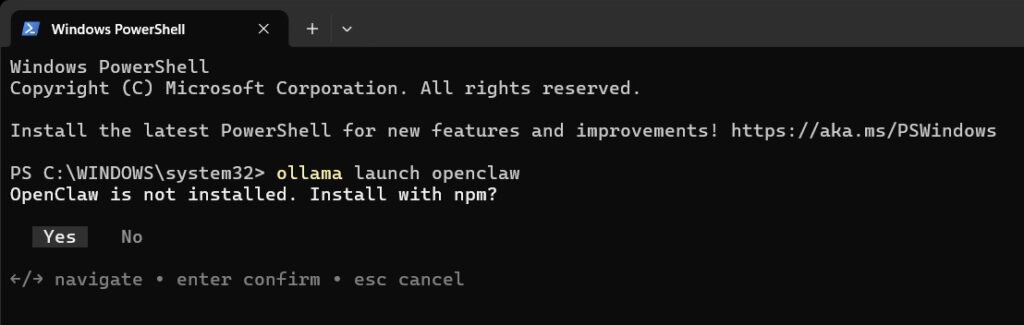
With the release of the native Ollama integration, that immense friction has been completely eradicated. Ollama has transitioned from a simple model engine into a comprehensive orchestration layer. Setting up a state-of-the-art, local-first agent architecture now requires typing exactly one command into your terminal:
PowerShell
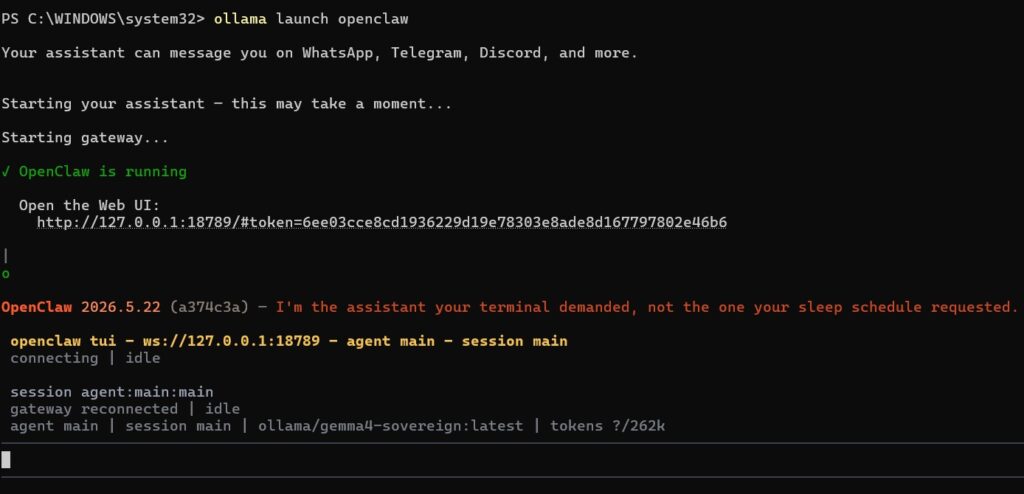
ollama launch openclaw
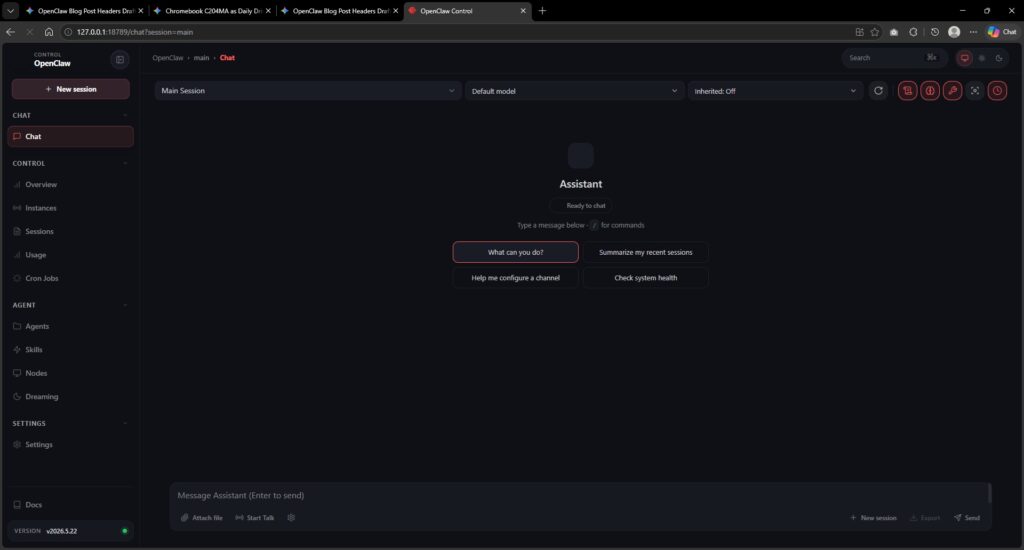
Ollama automatically audits your underlying OS environment, detects your Node.js runtime, pulls the secure OpenClaw gateway daemon via the Node Package Manager (npm), seeds your local file system workspace, provisions your bundled local web-search skill, and boots a clean, hardware-optimized Terminal User Interface (TUI) alongside a local web browser control dashboard running natively on port 18789.
Cutting the Cloud Cord: True Local Execution and Zero-SaaS Privacy
The release of this native single-command architecture represents a philosophical and economic milestone for digital sovereignty.
Just weeks ago, the AI industry experienced a massive structural shockwave: corporate cloud providers began aggressively blocking third-party open-source agent harnesses from accessing their flat-rate consumer web subscriptions. The underlying mathematical reason was stark—autonomous agentic loops are incredibly heavy, executing multiple recursive reasoning passes for a single user query, meaning an agent can consume up to five times more tokens than a standard linear text chat. Cloud giants realized that unconstrained agent usage completely shattered their SaaS profit margins, forcing them to lock their models behind metered enterprise API tollbooths.
By leveraging ollama launch openclaw, you completely bypass the corporate wall. Your agent executes its intense, multi-turn reasoning loops entirely on your own desktop iron. Your history, data structures, and personal documents remain completely private, hidden from centralized tracking algorithms and safe from platform amnesia.
Context is King: Powering 64k+ Agentic Tasks with Local Coder Models
Because autonomous agents don’t just output flat answers but actively evaluate their environment through recursive steps (e.g., Read File $\rightarrow$ Write Python Script $\rightarrow$ Evaluate Error $\rightarrow$ Rewrite Code $\rightarrow$ Output Final Answer), they demand a massive memory runway.
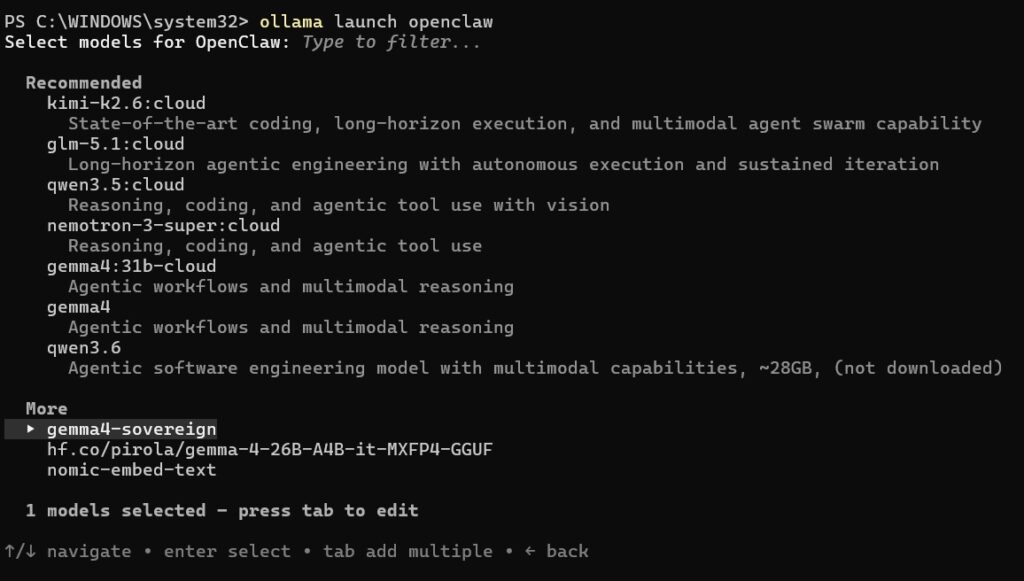
Standard cloud models throttle context windows to save server compute. OpenClaw, however, sets an aggressive system target of 64,000+ context tokens to hold multi-step agent actions without suffering structural memory loss. By matching this deep context runway with bleeding-edge local models (like the highly efficient Gemma 4 26B Mixture-of-Experts engine or Qwen Coder variants), you create a hyper-dense reasoning pipeline.
When you align these deep model parameters with local Blackwell architecture hardware—leveraging specialized matrix processing tiles to compress tensor layers—the model fits entirely within physical VRAM boundaries. This locks the execution into a flawless 100% GPU status, generating text at blistering speeds of 29 to 66+ tokens per second completely local and offline.
What Can OpenClaw Actually Do for You?
The Autonomous Heartbeat: How the Agent Works While You Sleep
Unlike a traditional terminal tool that stops execution the moment a script finishes running, OpenClaw runs a persistent background daemon driven by an internal Autonomous Heartbeat loop.
   ┌────────────────────────────────────────────────────────┐
   │             OPENCLAW AUTONOMOUS HEARTBEAT              │
   └───────────────────────────┬────────────────────────────┘
                               │
                [ Read Environment / Check Timer ]
                               │
                               ▼
               Evaluate Goals against HEARTBEAT.md
                               │
               ┌───────────────┴───────────────┐
               ▼                               ▼
       [ Tasks Pending ]               [ All Clear ]
       Execute Tools / Skills          Enter Deep Sleep Mode
       (File IO, Shell, Search)                │
               │                               │
               └───────────────┬───────────────┘
                               │
                   [ Wait For Next Heartbeat ]
The agent continuously checks a localized tracker file named HEARTBEAT.md. It evaluates pending goals, runs complex cron jobs, scans specified directories for fresh file additions, and processes raw documents. If you configure a secure channel link, it can monitor background data flows or flag high-priority anomalies, completely operating behind the scenes and only pinging your mobile chat client when a goal is achieved or a human decision gate is met.
ClawHub and Modular Skills: A Community-Driven Super-Ecosystem
OpenClaw expands its capabilities through a decentralized repository called ClawHub. Rather than rewriting core software architectures to teach your agent a new trick, skills are packaged as modular, human-readable Markdown or YAML definition sheets.
To give your agent deep research or specialized automation access, you simply install the skill directly via the command line:
PowerShell
openclaw skills install valyu-search
This updates your local configuration matrix. The agent instantly updates its system prompt parameters, maps the new tool execution boundaries, and knows exactly how to invoke the skill dynamically the very next time you hand it a complex problem statement.
The OpenClaw Distinction: Why This Isn’t Just Another AI Tool
Local Ownership: Your History, Memories, and Skills Kept in Plain Text
Enterprise cloud AI frameworks lock your conversation histories, vector mappings, and system prompts inside proprietary, highly siloed databases hidden behind cloud firewalls.
The OpenClaw distinction is built entirely on transparent plain-text sovereignty. When you inspect the background directory structure initialized on your machine:
C:\Users\YOUR_USER\.openclaw\workspace\
├── AGENTS.md        <-- Core Behavioral Prompt Controls
├── SOUL.md          <-- Philosophical Alignment Parameters
├── IDENTITY.md      <-- Contextual Role Definitions
└── memory\
    └── 2026-05-25.md <-- Persistent Local RAG Ledger Records
Every single piece of your agent’s personality, short-term memory cache, and vector RAG indices lives in standard Markdown or JSON files directly on your hard drive. You can open them in Notepad, back them up to a local drive, or edit its instructions directly with standard text tools. You own the code, you own the memory ledger, and you own the intelligence.
Granular Guardrails: Autonomy Built on Your Rules and Permissions
Giving an autonomous agent access to execute terminal commands and modify files naturally introduces security vectors. OpenClaw handles this through a highly strict, granular guardrail architecture.
You can set permissions to let the agent read data sheets or parse local folders autonomously while enforcing human-in-the-loop validation for high-risk vectors—such as executing destructive shell commands, editing core registry structures, or transmitting communication packets outside your local network. It provides maximum execution speed where you want it, and absolute defensive control where you need it.
Why You Should Spin Up OpenClaw Today
Reclaiming Creative and Digital Sovereignty
Relying on corporate cloud infrastructure means your workflows are constantly subject to change: models can be swapped out, context boundaries compressed, privacy terms rewritten, or access blocked entirely based on platform monetization shifting.
Building your local lab layout using an optimized, 100% GPU-accelerated engine paired with the OpenClaw gateway daemon is an act of pure creative and digital sovereignty. You establish a private, un-throttled computing fast-lane that belongs entirely to you.
Getting Started: Your First Local Agent is Only Five Minutes Away
The local agentic frontier is no longer a complex theory hidden inside academic research whitepapers—it is a living execution model that sits right inside your terminal.
Open a fresh, administrative terminal window on your machine and fire up the native launch sequence:
PowerShell
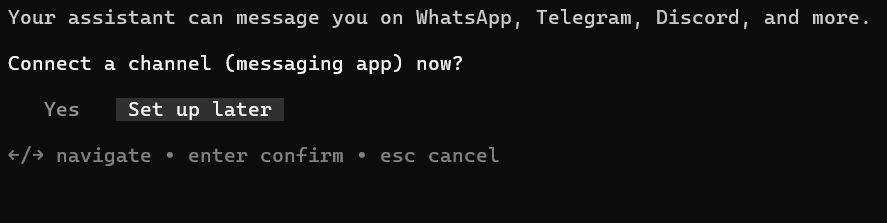
Select your hand-tuned, hardware-optimized local model from the TUI picker menu, choose “Set up later” to boot into a clean loopback sandbox mode, and watch your graphics hardware step forward to claim its place as a completely sovereign, autonomous operations station. The machine is fully optimized, the parameters are locked, and the data ledger is completely yours to command!
Want the perfect LLM to work with OpenClaw Check out this post!