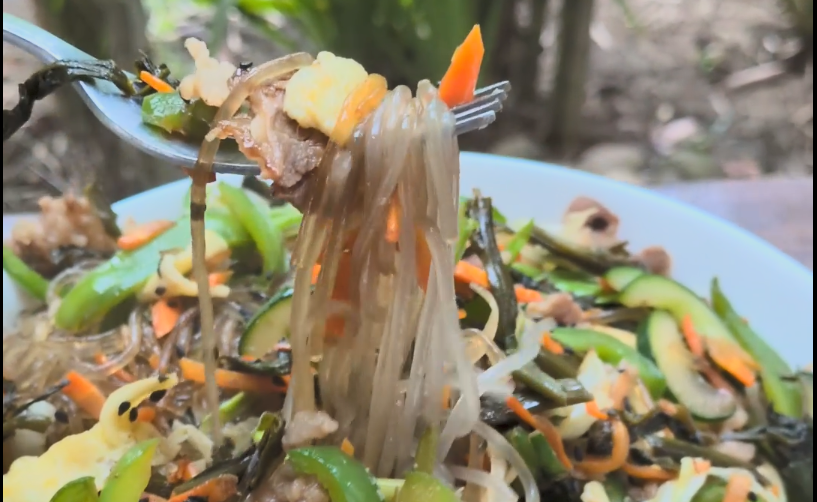
Delicious Japchae Quick and Easy
This is Korean comfort food made simple, made real—sweet potato noodles, stir-fried veggies, tender slivers of beef or mushroom, all coated in a glossy, sweet-savory glaze. No fancy prep. No separate boiling. Just one pan, one loop, and one moment to breathe.
✨ Dish: Quick & Easy One-Pan Japchae
🎶 Mood: Numb Little Bug (Piano Version) — intro loop
🍳 Made in: Real-time, no cuts, no fuss
🧠 Powered by: WhisperTechAI – the kitchen where emotion meets execution
Table of Contents
Quick and Easy Japchae Recipe
📌 Ingredients
- Sweet potato (glass) noodles
- Garlic
- Onion
- Carrots
- Bell peppers
- Kangkong or spinach (sub with Cabbage and cucumber)
- Shiitake mushrooms (optional)
- Soy sauce
- Sesame oil
- Brown sugar
- Toasted sesame seeds
📋 Instructions (short version)
- Sauté garlic + onion in sesame oil
- Add carrots, bell pepper, mushrooms
- Toss in softened noodles + sauce mix
- Finish with kangkong/spinach
- Garnish with sesame seeds and serve warm
–––
💡 No edits. No filters. Just food made with feeling.
🌐 More recipes + blog posts: https://whispertechai.com/recipes/
🛍️ Support the Kitchen: https://ko-fi.com/whispertechai
One-Pan Japchae: The Soul of Korean Comfort in a Single Skillet
Japchae has long been a centerpiece in Korean households—a sweet, savory, stir-fried tangle of glass noodles, vegetables, and protein. Traditionally reserved for celebrations or special occasions, it represents more than just food; it’s a symbol of hospitality, harmony, and the delicate balance of flavors that defines Korean cuisine. But in the rush of everyday life, that complexity can feel just out of reach. That’s where the genius of one-pan Japchae comes in.
At its heart, Japchae is a dish of contrasts: chewy yet tender sweet potato noodles (called dangmyeon), vibrant vegetables cooked just enough to retain their texture, and a sauce that’s equal parts salty, sweet, and nutty. The traditional method often involves cooking each component separately—a process that, while respectful of each ingredient’s integrity, can also be time-consuming and dish-heavy.
But this version—cooked entirely in one pan—strips down the process without sacrificing soul.
The recipe is simple: sauté garlic and onion in sesame oil, toss in your vegetables, add softened noodles, pour over a light soy-sugar glaze, and finish with a handful of kangkong or spinach. A sprinkle of sesame seeds completes the dish. There’s no boiling pot on the side, no five-bowl mise en place. Just one flame, one vessel, one moment to let it all come together.
Yet within that simplicity lies something deeper.
This isn’t just a shortcut; it’s a reflection of our lives today. We’re tired. We’re overwhelmed. We crave food that doesn’t just fill us, but soothes us. When you cook Japchae this way—with quiet music playing, vegetables sizzling gently, and the scent of sesame in the air—it becomes more than dinner. It becomes ritual. A reminder that comfort doesn’t need to be complicated.
And there’s genius in that.
Because by simplifying the technique, we unlock Japchae for anyone—whether you’re a first-time home cook or a nostalgic Pinoy looking to reconnect with Korean flavors through a Filipino lens. Adding kangkong instead of spinach? That’s fusion. Using leftover mushrooms or bell peppers from the fridge? That’s sustainability. Cooking it in one pan? That’s love, made efficient.
In our version here at WhisperTechAI, the entire sequence plays out like a soft memory—backed by the melancholic notes of “Numb Little Bug (Piano Version).” It’s food that understands your mood. A dish for when you’re running on empty but still want something warm. Something real.
Because sometimes, the greatest meals aren’t born out of grand ambition—they’re born out of quiet need. Out of resilience. Out of choosing presence, even for just 15 minutes in your kitchen.
So whether you’re revisiting childhood flavors, exploring Korean cuisine for the first time, or just trying to make sense of a long day—this one-pan Japchae is your gentle answer.
One pan. One loop. One dish that says: You’re allowed to rest here.