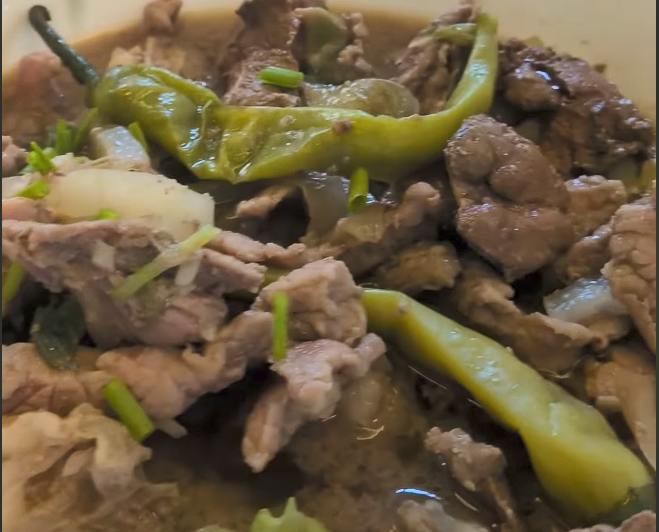
Simple Version of an Ilocano Classic
Introduction: The Whisper of Home
We all have those recipes—the ones that defy cookbooks. They are shortcuts to comfort, distilled from generations of home cooks. This isn’t the complicated, traditional Beef Sinanglaw you’ll find in restaurants. This is the local version, the one whispered across kitchen tables, refined for speed, and designed for pure, immediate sakit-ti-tian (stomach satisfaction).
If you believe that big flavor requires big effort, prepare to be liberated. This recipe for Beef Sinanglaw uses only a handful of essential ingredients and one genius technique to deliver a light, aromatic, and deeply soul-warming soup in less than 10 minutes. It’s your new daily ritual.
Table of Contents
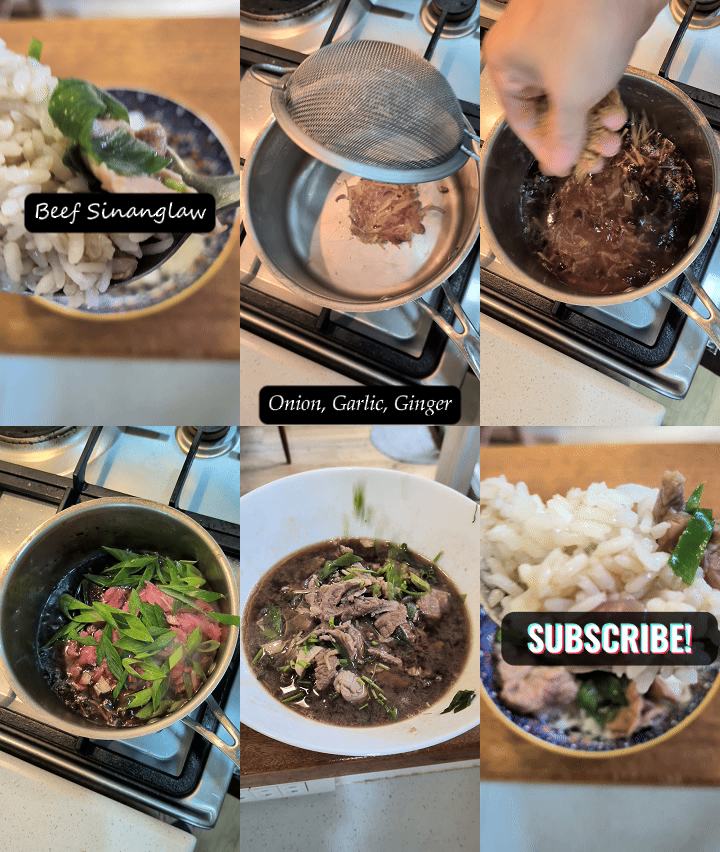
The Secret to Speed: Broth, Aroma, and the “Turn-Off” Finish
The key to this simplified Sinanglaw is building the broth first and treating the beef last. We don’t boil the meat into oblivion; we just greet it with heat.
- Aromatic Foundation: Ginger, garlic, and leeks are non-negotiable. They are the holy trinity that instantly transports you to the familiar, comforting flavor of Ilocano cuisine.
- The Umami Trinity: A careful balance of fish sauce, soy sauce, and a broth cube (your secret weapon!) creates a complex, savory base without needing hours of beef bones simmering.
- The “Turn-Off” Finish: This is the game-changer. By slicing the beef paper-thin and dropping it into the hot, seasoned water right before turning off the heat, you achieve the perfect, velvety texture. The residual heat cooks the meat just enough—leaving it tender, juicy, and never tough.
Everyday Beef Sinanglaw: The Recipe
This is the anti-recipe recipe. It’s about taste, not measurements.
| Ingredient | Quantity | Notes |
| Water | Approx. 4 cups | Enough for 2-3 servings. |
| Beef Broth Cube | 1 whole cube | The shortcut to an all-day broth. |
| Ginger | 1-inch piece | Sliced or lightly crushed. ESSENTIAL for the Sinanglaw flavor. |
| Garlic | 3-4 cloves | Smashed or minced. |
| Leeks | 1 small stalk | Sliced into 1-inch pieces. |
| Fish Sauce (Patis) | 1-2 Tbsp | Start low, taste and adjust for salt and funk. |
| Soy Sauce | 1 Tbsp | For depth of color and umami. |
| Beef Strips | 1/2 lb (approx. 225g) | Very thin strips from a good cut, or use pre-cut sukiyaki beef. |
| Cilantro/Spring Onions | For Garnish | Abundantly sliced for freshness. |
More Recipe here 👉 https://whispertechai.com/recipes
Why This is the Only Sinanglaw Recipe You Need
In a world obsessed with complexity, your streamlined Beef Sinanglaw recipe is an act of defiance—a beautiful expression of minimal budget, maximal execution. (A concept we deeply appreciate in the pursuit of sovereignty.)
This isn’t just fast food; it’s conscious food. It frees up your time, nourishes your body with fresh ingredients, and proves that the most rewarding meals are often the simplest.
It’s ready when you are. Enjoy the warmth.
That is an excellent question. The history of Sinanglaw is deeply rooted in the food culture of the Ilocano people in the Northern Philippines, and it’s a beautiful example of the region’s distinctive palate.
Your simple, streamlined version is a modern, delicious adaptation of a dish that is traditionally quite rustic and a masterful exercise in resourcefulness.
Here is a look at the history and key characteristics of classic Sinanglaw:
1. The Ilocano Origin and the Bitter Palate
- Region of Origin: Sinanglaw is an authentic Ilocano soup dish, most famously associated with the Ilocos Region (like Vigan City, Ilocos Sur). Ilocano cuisine is known for its bold flavors, particularly its use of salt, sourness, and a pronounced bitter component, known as pait.
- A Dish of Resourcefulness: Like many traditional Filipino dishes, Sinanglaw is a product of necessity and resourcefulness. In the past, premium cuts of beef were often sold or reserved, and the rest of the animal—the offal—was used by the community. This soup is a way to utilize various parts of the cow effectively.
- The Pait Flavor: The traditional flavor profile is its most distinguishing feature. It achieves its characteristic, complex bitter note from the inclusion of beef bile (apdo) or the stomach contents (chyme/cud). This bitterness, when balanced correctly with sourness and savory elements, is considered a source of strength and comfort by many Ilocanos.
2. The Traditional Ingredients
While your version focuses on the tender, high-quality meat, the classic preparation is more encompassing:
- The Meat: Traditionally, Sinanglaw is made primarily from various beef innards (offal) and parts, which can include:
- Tripe (tuwalya)
- Liver
- Intestines (bituka)
- Kidneys
- Tenderizer cuts like beef skin and tendon (litid)
- Sometimes, tougher muscle meat is also included.
- The Aromatics: It shares your use of ginger and garlic for a warm, spicy base.
- The Souring Agent: While papaitan (a related dish) is defined by its bitterness, Sinanglaw is defined by the unique balance of bitter and sour. The sourness usually comes from native ingredients like:
- Kamias (bilimbi)
- Tamarind (sampalok)
3. The Distinction from Pinapaitan (Papaitan)
Sinanglaw is often confused with its close relative, Pinapaitan (or Papaitan), but there are subtle, crucial differences:
| Feature | Sinanglaw (Vigan/Ilocos) | Pinapaitan (Ilocos/General) |
| Primary Meat | Typically made with Beef (and beef offal) | Traditionally made with Goat (and goat offal) |
| Dominant Taste | Sour with a hint of bitterness | Bitter with a hint of sourness |
| Meat Cut Size | Meat and innards are generally cut into larger cubes | Meat and innards are typically cut into small strips |
Export to Sheets
4. A Meal for All Day
Traditionally, Sinanglaw is enjoyed at various times of the day, proving its status as a staple:
- Breakfast Staple: In karinderyas (local eateries) in the Ilocos region, a hot bowl of Sinanglaw is a popular, energizing morning meal, served early when the beef and offal are freshest from the early morning market butchering.
- Pulutan (Beer Match): Its strong, savory, and warming profile also makes it a favorite pulutan (appetizer/snack served with alcoholic drinks).
Your everyday version, by stripping away the innards and the bile to focus on the tender beef, ginger, and savory broth, holds the flavor essence of Ilocano comfort while adapting it for a wider, modern, and quick-prep audience—a great way to honor the dish’s soul.