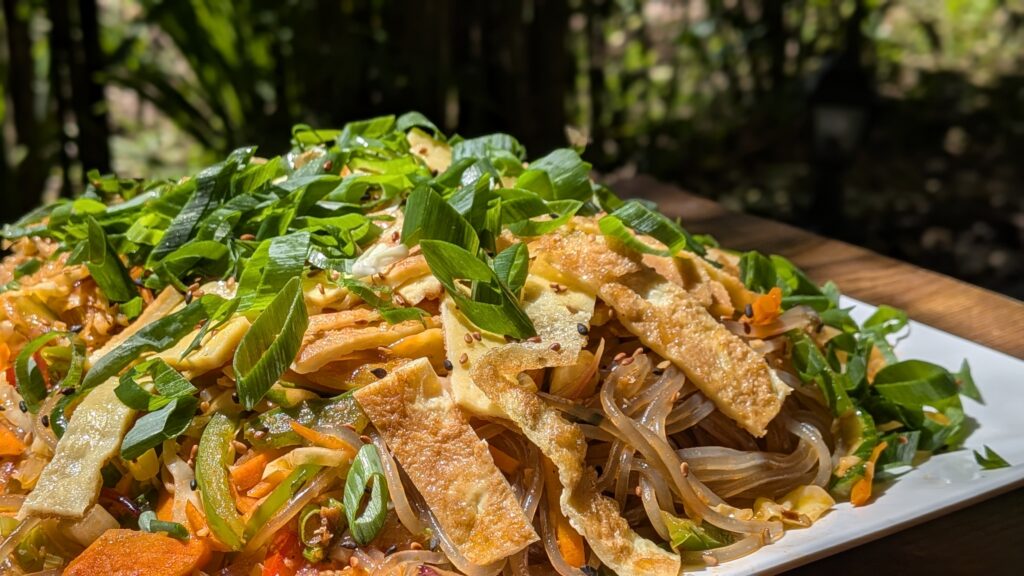
Simple, Healthy, Fresh, Japchae
What is Japchae?
If you’ve ever ordered a platter of Japchae (잡채) at a Korean restaurant, you know the feeling: those perfectly slick, chewy glass noodles, the rainbow of crisp vegetables, and that sweet, savory, deeply comforting sauce. It’s an iconic dish, the king of celebratory Korean feasts.
But if you’ve tried to make it at home, you probably also know the reality: the multi-step, multi-pan, blanch-then-sauté-separately technique that leaves your kitchen looking like a culinary battlefield.
Traditional Japchae is a labor of love. We respect the tradition, but we embrace efficiency.
Enter the One-Pan Vegetarian Japchae—a game-changer that slashes the cooking time, streamlines the process, and, most importantly, keeps all the iconic, deeply satisfying flavor intact. This isn’t a shortcut that sacrifices quality; it’s a smart evolution, borrowing from tradition while adapting to the demands of a modern kitchen and the pace of a busy weeknight.
Table of Contents
Why This Japchae Recipe is Your Next Go-To
In the pursuit of speed, many stir-fry recipes lose their soul. Not this one. This recipe is designed to maximize umami and texture with minimal fuss.
| Feature | The Traditional Way | The One-Pan Revolution |
| Pans Used | 3-4 (for blanching & separate sautéing) | 1 Large Wok or Pan |
| Protein | Often beef or pork | Vegetarian-Friendly (Mushrooms recommended) |
| Umami Source | Beef stock, meat fat | Kimchi Juice & Mushroom Sauce (The secret!) |
| Time | 45-60 minutes | Under 30 Minutes |
Export to Sheets
This version excels because we leverage a secret weapon for depth: fermentation. By integrating a touch of Gochujang and, crucially, Kimchi Juice, we skip the long process of separate seasoning and infuse the entire dish with a gentle heat and a profound, savory funk that would normally take hours to develop.
It’s fast, it’s flavorful, and it’s the perfect way to get a complex, exciting meal on the table when you’re low on time and motivation.
The Magic Ingredient: Glass Noodles (Dangmyeon)
The very soul of Japchae lies in its noodles. They are not rice noodles or wheat noodles, but potato starch noodles (or sweet potato starch noodles, known as dangmyeon).
These noodles are what give Japchae its signature texture: chewy, slightly elastic, and wonderfully absorbent. They become almost transparent when cooked, earning them the nickname “glass noodles.” It’s essential to use these for an authentic texture experience—nothing else quite compares to their satisfying springiness.
- Prep Tip: Don’t overcook them! A 10-15 minute soak in hot water, or a quick boil until just al dente, is all you need. They will finish cooking as they absorb the sauce in the pan.
Ingredients: Building the Sweet-Savory Umami
This ingredient list is built on pantry staples and easily sourced fresh produce. Notice the strategic inclusions that replace the meat’s depth with plant-based power.
The Foundation
- 200g Potato Starch Noodles (Glass Noodles): The star of the show.
- 1 tbsp Cooking Oil: For high-heat stir-frying.
The Aromatics & Veggies
- 3 cloves garlic, minced
- 1 onion, sliced
- 1/2 carrot, julienned: Adds sweetness and crunch.
- 1/2 red bell pepper, sliced thin: For color and mild sweetness.
- 1/2 cucumber, julienned (or zucchini): For freshness and texture contrast.
- 1 cup spinach or pechay leaves: A vibrant green element.
- 1 stalk leek or green onion, sliced
The Sauce & Umami Secrets
- 1 tbsp Gochujang (Korean Chili Paste): Adds color, gentle heat, and depth.
- 1 tbsp Kimchi Juice (Optional but highly recommended): The ultimate umami booster, replacing the need for long-simmered broth.
- 1 tbsp Vegetarian Oyster Mushroom Sauce: A savory, thick base that mimics the mouthfeel of traditional oyster sauce. Ensure it is mushroom-based for a truly vegetarian version.
- 2 tbsp Soy Sauce: Salty foundation.
- 1 tbsp Sesame Oil: Adds the signature nutty aroma and glaze.
- 1 tsp Brown Sugar: Balances the savory sauces.
- 1/4 tsp MSG (Optional): A quick way to dial up the savory experience.
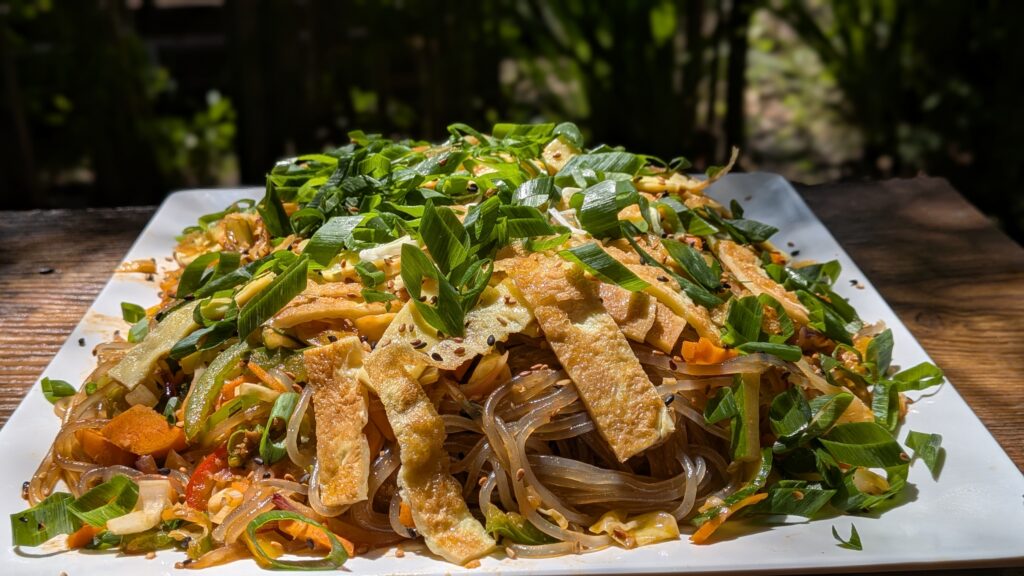
- Garnish: Thinly sliced scrambled egg and fresh scallions.
Instructions: The Streamlined Approach
The beauty of the one-pan method is in the layering. We build the flavor right into the wok.
- Prep the Noodles: Soak potato starch noodles in hot water for 10–15 minutes or boil briefly until soft but still chewy. Drain immediately and set them aside. Drizzling with a tiny bit of sesame oil prevents sticking.
- Sauté the Aromatics: In a large pan or wok, heat oil over medium-high heat. Sauté the garlic and onions until they are fragrant and translucent—about 2-3 minutes.
- Add the Veggies: Toss in the carrots, bell pepper, cucumber, spinach/pechay, and leeks. Stir-fry quickly until the vegetables are just softened, maintaining a slight crunch.
- Build the Base Flavor: This is the critical step. Add the gochujang and kimchi juice. Toss with the vegetables until they are evenly coated and the paste is fragrant. This “blooming” of the spice paste is key to unlocking its full flavor.
- Add the Noodles + Sauce: Add the drained, prepared noodles into the pan. Pour in the vegetarian oyster sauce, soy sauce, sesame oil, brown sugar, and MSG (if using). Mix vigorously with tongs to ensure the noodles and vegetables are thoroughly coated and the noodles absorb all that beautiful color and flavor. Cook for an additional 2-3 minutes.
- Finish and Serve: Transfer the Japchae to a serving platter. Garnish generously with the thinly sliced scrambled egg and fresh green onions. Serve warm or at room temperature—Japchae is famously excellent cold the next day!
Customization: A Cultural Crossroad
Food is a journey, and this recipe is a testament to how flavors travel. While Japchae is traditionally Korean, this specific one-pan, vegetable-forward recipe leans into a common Filipino household adaptation—using readily available greens like pechay or kangkong, and embracing the use of seasonings like MSG for that characteristic umami punch.
- Boost the Umami: Add shiitake or oyster mushrooms in Step 3. They provide a dense, meaty texture and an incredible amount of natural umami that is essential in a vegetarian preparation.
- Keep it Vegan: Ensure you use a certified vegan oyster mushroom sauce (check for honey or dairy derivatives) and skip the egg garnish.
- More Heat: Stir in chili flakes or a dash of gochugaru (Korean chili powder) at the same time you add the gochujang.
This recipe honors the spirit of Japchae—its texture, its color, and its distinctive sweet-savory balance—but frees you from the rigid, time-consuming methods. You don’t have to follow every traditional step to honor a dish; you just have to cook it with care, efficiency, and a passion for flavor.
Embrace the one-pan revolution. Your weeknights—and your taste buds—will thank you.
Watch the Full Recipe
📺 YouTube: One Pan Japchae Shorts
🎶 TikTok: Vegetarian Japchae Reel
More Dishes Like This
👉 One Pan Fish Escabeche
👉 Ampalaya Con Carne